
Saving Children's Teeth With Gentle Pediatric Dental Care
When a cavity is left untreated, the decay can gradually spread deeper into the tooth and reach the dental pulp, which contains nerves and blood vessels. At this stage, a child may experience pain, sensitivity, swelling, or infection.
Rather than removing the tooth immediately, pediatric dentists often try to preserve the natural baby tooth whenever possible. Procedures such as pulpotomy and pulpectomy, commonly referred to as baby root canal treatments, are designed to treat infected pulp while helping maintain the tooth until it is naturally replaced by a permanent tooth.
At Shree Child Dental Care Centre, we provide pulpotomy and pulpectomy treatment for children in Vellore using child-friendly techniques and individualized treatment planning.
Under the care of Dr. R.A. Sowmiya Sree, MDS – Pediatric & Preventive Dentist, our focus is on relieving pain, controlling infection, and preserving your child's oral health whenever appropriate.
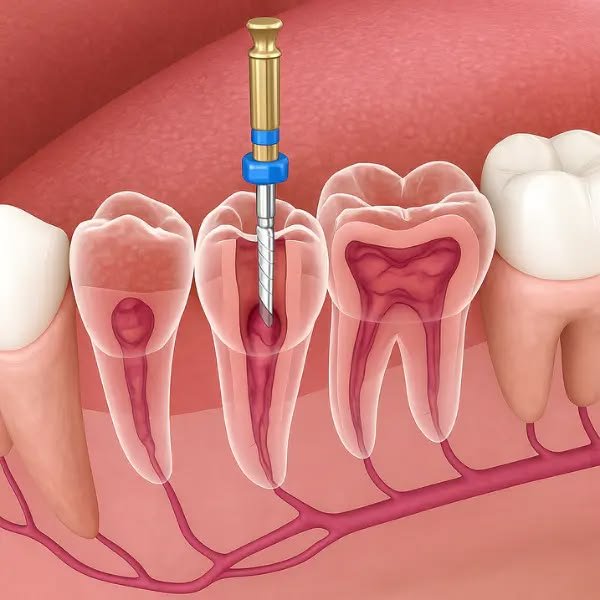
Both procedures are used to treat infected or damaged pulp in a baby tooth, but they are recommended for different clinical situations.
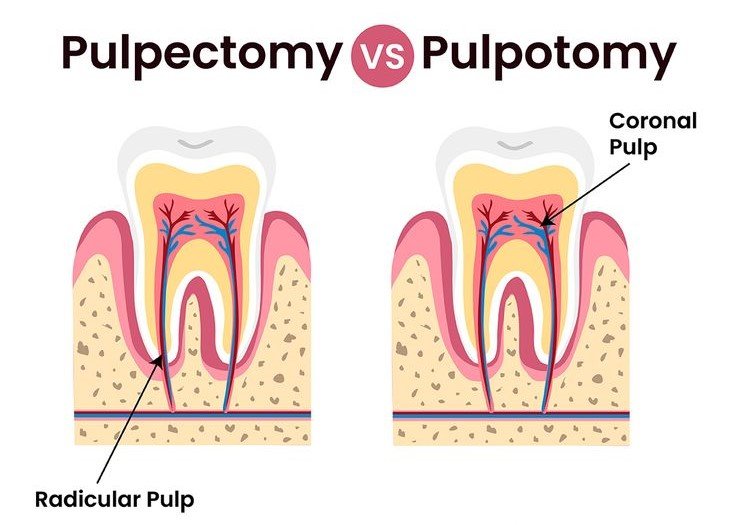
A pulpotomy involves removing the infected or inflamed pulp from the crown portion of the tooth while preserving the healthy pulp in the roots whenever possible.
The remaining healthy tissue is protected with a suitable dental material, and the tooth is restored to maintain its function.
A pulpotomy may be considered when the infection has not spread extensively into the root canals.
A pulpectomy involves removing infected pulp tissue from both the crown and the root canals of the baby tooth.
After cleaning the canals, they are filled with a material designed for primary teeth, and the tooth is restored.
A pulpectomy may be recommended when infection has extended throughout the pulp tissue but the tooth can still be preserved.
Many parents believe baby teeth do not need treatment because they will eventually fall out. However, preserving baby teeth is often important.
Premature loss of a baby tooth can sometimes lead to spacing problems or the need for additional orthodontic treatment later.
Early examination helps determine the most appropriate treatment before the condition worsens.

Early examination helps determine the most appropriate treatment before the condition worsens.
The most common causes include:
Regular dental check-ups and early treatment of cavities can reduce the risk of these complications.
Treatment is planned carefully based on your child's clinical examination and, when necessary, dental X-rays. The process generally includes:
The dentist evaluates the affected tooth and determines whether pulpotomy, pulpectomy, or another treatment is most appropriate.
The procedure is performed using child-friendly techniques to help your child remain as comfortable as possible.
Depending on the diagnosis:
After treatment, the tooth is restored. In many cases, a pediatric dental crown may be recommended to protect the treated tooth and restore its strength and function.
Although both procedures are used to treat infected baby teeth, the appropriate treatment depends on the extent of the infection.
| Feature | Pulpotomy | Pulpectomy |
|---|---|---|
| Infection Location | Crown portion of the pulp | Crown and root canals |
| Goal | Preserve healthy root pulp | Remove infected pulp completely |
| Tooth Preservation | Yes | Yes, where appropriate |
| Common Use | Early pulp involvement | More extensive pulp infection |
| Final Restoration | Often a pediatric crown | Often a pediatric crown |
Your pediatric dentist will recommend the most suitable treatment after a clinical examination and, if required, dental X-rays.
After a pulpotomy or pulpectomy, the treated baby tooth may become weaker because a portion of its internal structure has been affected by decay or infection.
To protect the tooth and help it function until it naturally falls out, a pediatric dental crown may be recommended.
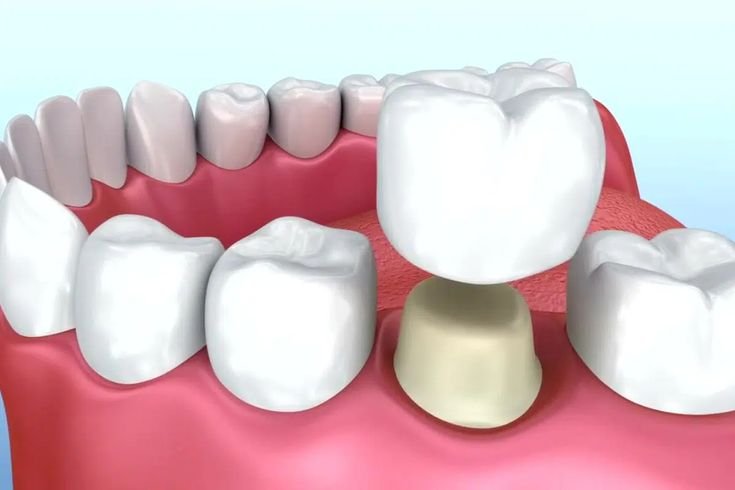
The need for a crown depends on the amount of remaining tooth structure and your child's individual treatment plan.
Whenever possible, preserving a baby tooth is often preferable to early extraction.
Benefits include:
The decision to save or remove a tooth is based on its condition and long-term prognosis.
Most children recover well after treatment. Parents may notice mild tenderness for a short period, which generally improves as the tooth heals.
Following the dentist's aftercare instructions supports a smooth recovery. Recommendations may include:If your child develops significant swelling, persistent pain, or fever after treatment, contact the clinic promptly for evaluation.
In many cases, yes.
When the tooth is suitable for treatment, pulpotomy or pulpectomy can help preserve it until it naturally falls out.
However, if the tooth is severely damaged, has extensive infection, or cannot be restored predictably, extraction may be the better option.
Your pediatric dentist will explain all suitable treatment options before proceeding.
At Shree Child Dental Care Centre, we understand that children with tooth pain need prompt, compassionate, and skilled care.
Pediatric & Preventive Dentist
Your child is treated by:
We use gentle behaviour guidance techniques to help children feel calm and comfortable throughout their visit.
Our goal is to create a positive experience while delivering effective treatment.
Every child receives an individualized assessment based on:
We recommend only the treatment that is appropriate for your child's condition.
If additional care is needed, we provide access to a full range of pediatric dental services, including:

A baby root canal is a common term used for pulpotomy or pulpectomy, procedures performed to treat infection inside a baby tooth while preserving the tooth whenever possible.
A pulpotomy removes infected pulp from the crown portion of the tooth while preserving healthy root tissue when appropriate.
A pulpectomy removes infected pulp from both the crown and the root canals before the tooth is restored.
The choice depends on the extent of infection.
The treatment is planned to keep children comfortable. Your pediatric dentist will use appropriate techniques and explain each step in a child-friendly manner to help reduce anxiety.
Whenever possible, preserving a baby tooth helps maintain chewing function, speech development, and space for the permanent tooth. Extraction is recommended only when the tooth cannot be predictably restored.
In many cases, yes. A pediatric dental crown helps protect the treated tooth, restore function, and reduce the risk of fracture until the tooth naturally falls out.
The treatment time varies depending on the tooth, the extent of infection, and the child's cooperation. Your dentist will discuss the expected duration during the consultation.
Many treated baby teeth continue to function well until they are naturally replaced by permanent teeth, provided they are restored appropriately and monitored during regular dental visits.
Possible signs include:
A dental examination is needed to determine the cause and the most appropriate treatment.
Untreated infection may progress, leading to increased pain, swelling, abscess formation, and possible damage to surrounding tissues or the developing permanent tooth.
Follow the dentist's instructions carefully. Encourage gentle brushing, maintain good oral hygiene, and attend scheduled follow-up appointments.
Not every child requires antibiotics. They are prescribed only when clinically indicated, such as in certain cases of infection. Your dentist will determine whether they are necessary.
The best prevention includes:
A painful or infected tooth can affect your child's eating, sleeping, and daily activities. Seeking treatment early can help preserve the tooth and prevent the infection from becoming more serious.
At Shree Child Dental Care Centre, we provide compassionate, child-focused care tailored to your child's individual needs. Our aim is to relieve discomfort, restore oral health, and help your child feel comfortable throughout every step of treatment.
Shree Child Dental Care Centre
Dr. R.A. Sowmiya Sree, MDS – Pediatric & Preventive Dentist
1F, Arcot Road, Sathuvachari, Vellore – 632009
Monday – Saturday | 9:00 AM – 6:00 PM